There is a specific kind of magic that happens during a Kanha tiger safari that you won’t find anywhere else. While the landscapes we explored in Part 1 set the stage, Part 2 is all about the adrenaline of the “track.” For our family, the real thrill wasn’t just the eventual sighting, but learning the secret language of the forest—the alarm calls, the fresh pug marks, and the heart-pounding silence that signals a predator is near.
The Language of the Forest: Alarm Calls and Pug Marks
There is a specific silence that falls over the jungle just before something big happens. One moment you are admiring the Sal trees, and the next, the air is pierced by the sharp, metallic alarm call of a Langur from the canopy or the frantic barking of a Spotted Deer (Chital).
Alerted by the alarm calls.
Our guide immediately cut the engine. In that stillness, we felt the true pulse of the wild. We watched as our tracker pointed out fresh pug marks pressed into the soft morning dust. Following those prints, heart racing, while listening to the “jungle news” told by the monkeys and deer, is an adrenaline rush that no documentary can replicate. It’s a sensory game of hide-and-seek that had our 7-year-old perched on the edge of her seat.
When the King Emerges
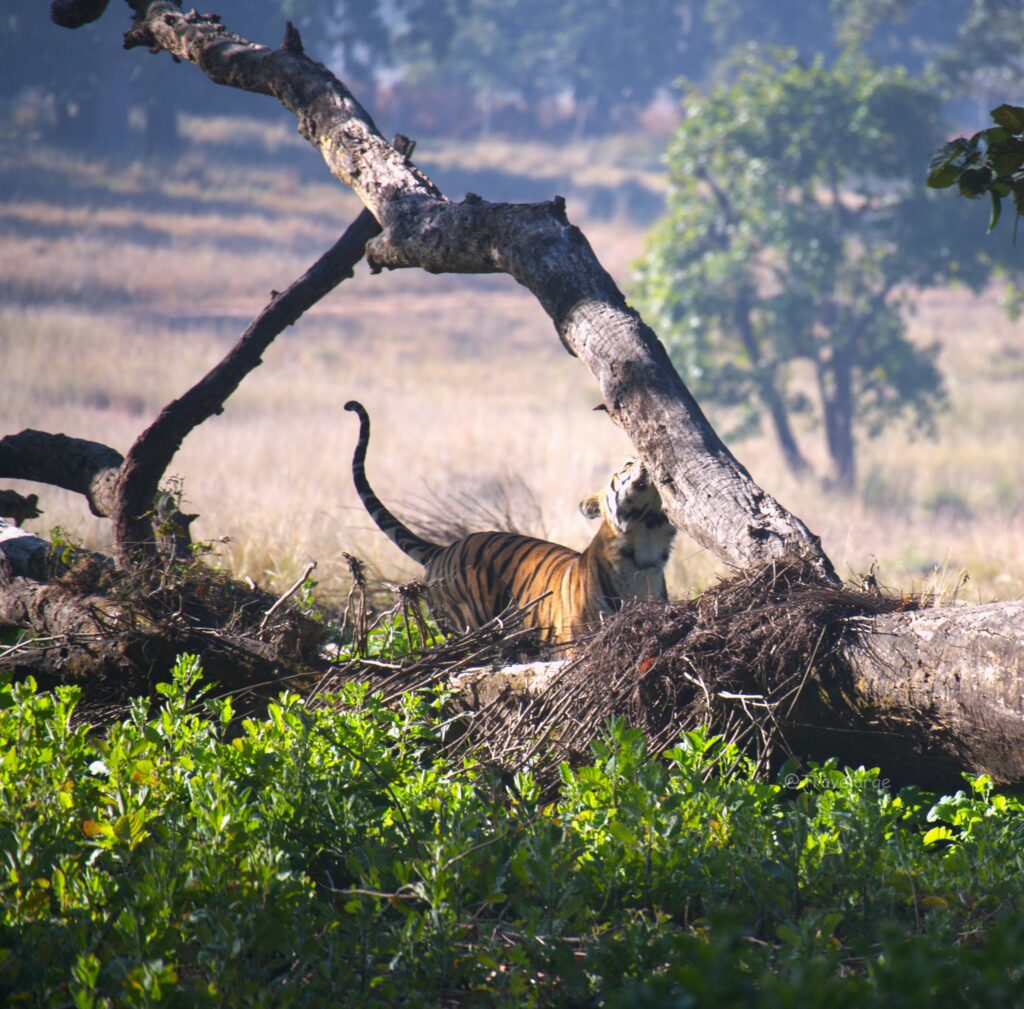
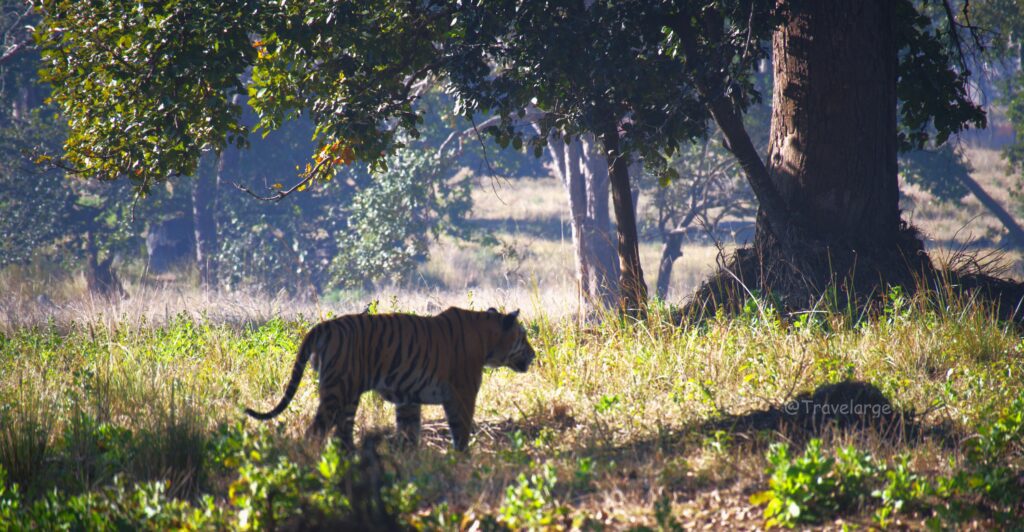
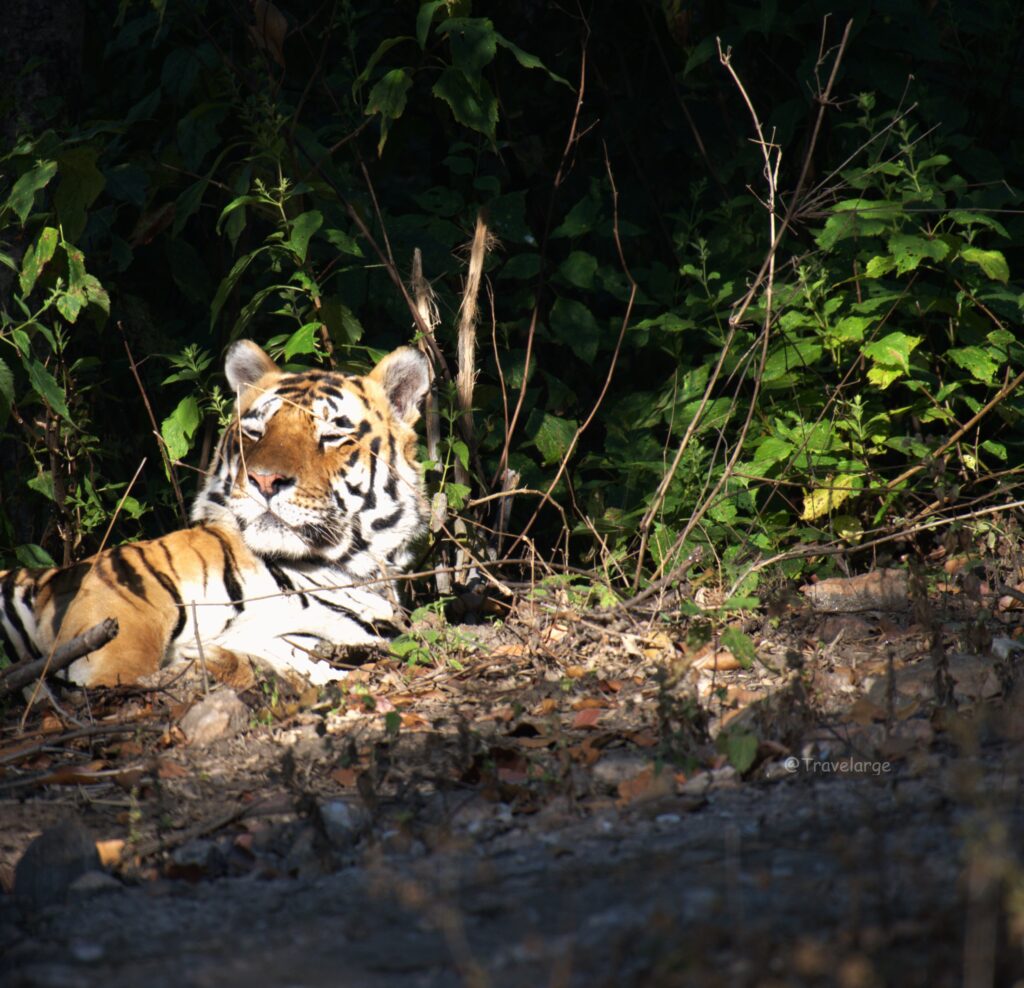
Nothing prepares you for the moment a Bengal Tiger finally steps out from the tall grass. It’s not just the size; it’s the sheer weight of its presence. We sat in hushed awe as we watched a tiger following the very deer and langur calls we had been tracking—a masterclass in stealth and power.
The majestic Junior Bajrang marking its territory.
And he decided to walk past us.
A Sanctuary of Rare Wonders
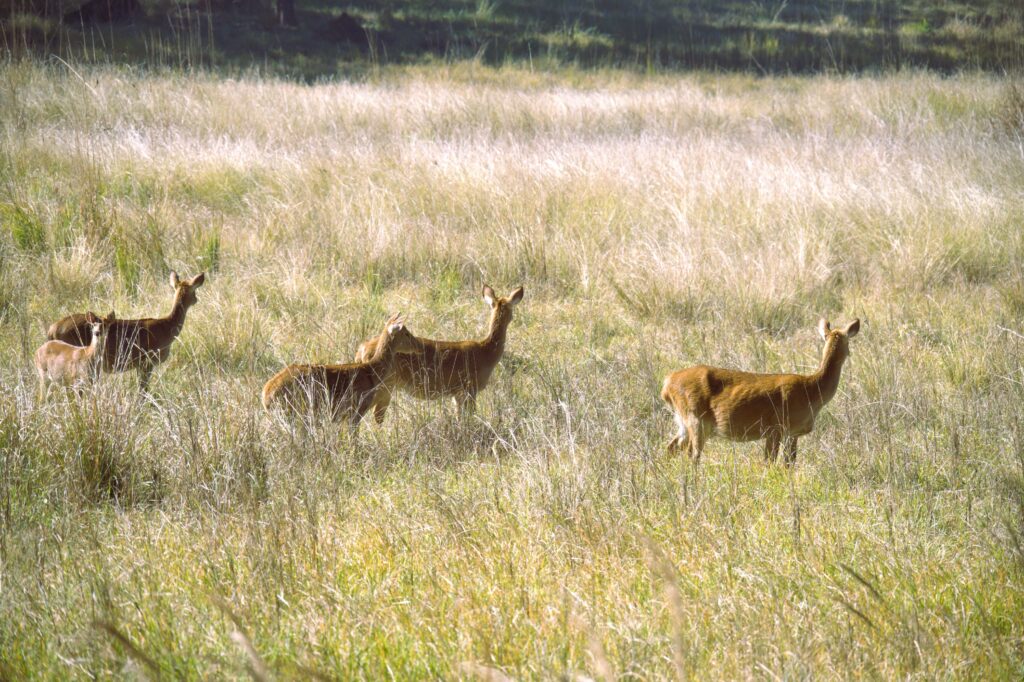
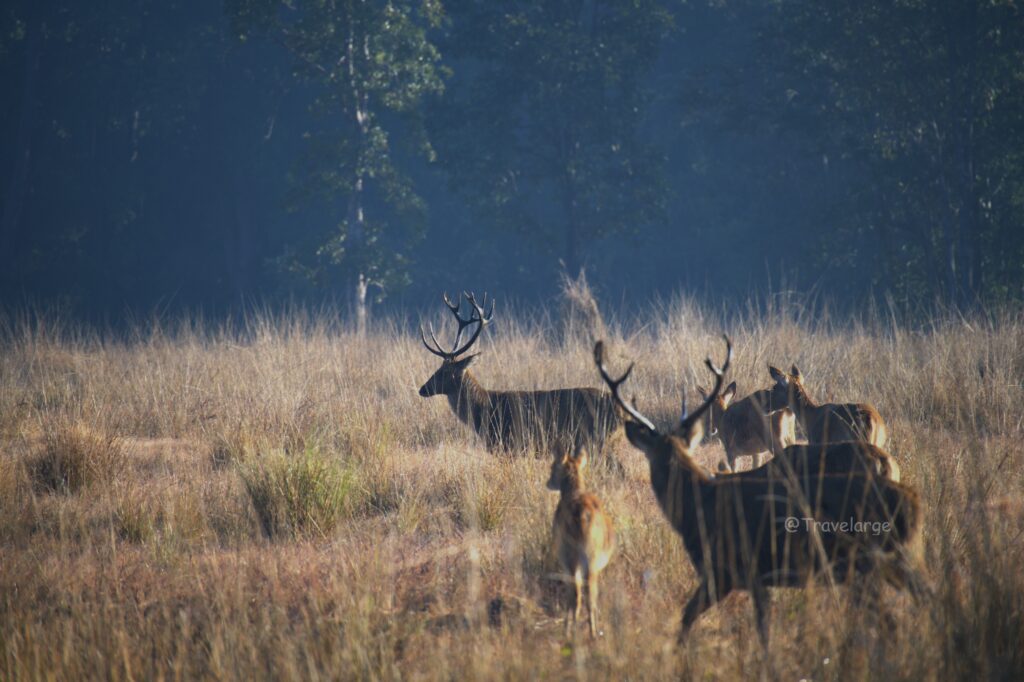
While the tiger is the icon, the biodiversity of Kanha is staggering. We were incredibly lucky to spend time with the Hardground Barasingha (Swamp Deer). Once nearly extinct, these majestic deer with their multi-tined antlers are now thriving in the meadows—a true conservation miracle found only here.
A family of the Barasingha.
As we traversed the forest, the sheer variety of life was constant:
The Deer of Kanha: Beyond the Barasingha, we saw the elegant Chital (Spotted Deer) everywhere, the large and shy Sambar (India’s largest deer), and the tiny, elusive Barking Deer (Muntjac) hiding in the thickets.
The Wild Inhabitants: We encountered massive Gaur (Indian Bison), groups of Wild Boar foraging near the tracks, and even caught a glimpse of a Fox darting through the undergrowth.
The Predators in Waiting: While the tiger is king, keep your eyes peeled for the flickering shadow of a Leopard or a pack of whistling Dholes (Wild Dogs).
A sighting of Nala Neela at the Mukki Zone
A Birder’s Paradise
Even when the big cats were hiding, the sky and canopy were alive with color. Some of our favorite sightings included:
The vibrant Indian Roller (Blue Jay) with its stunning wings.
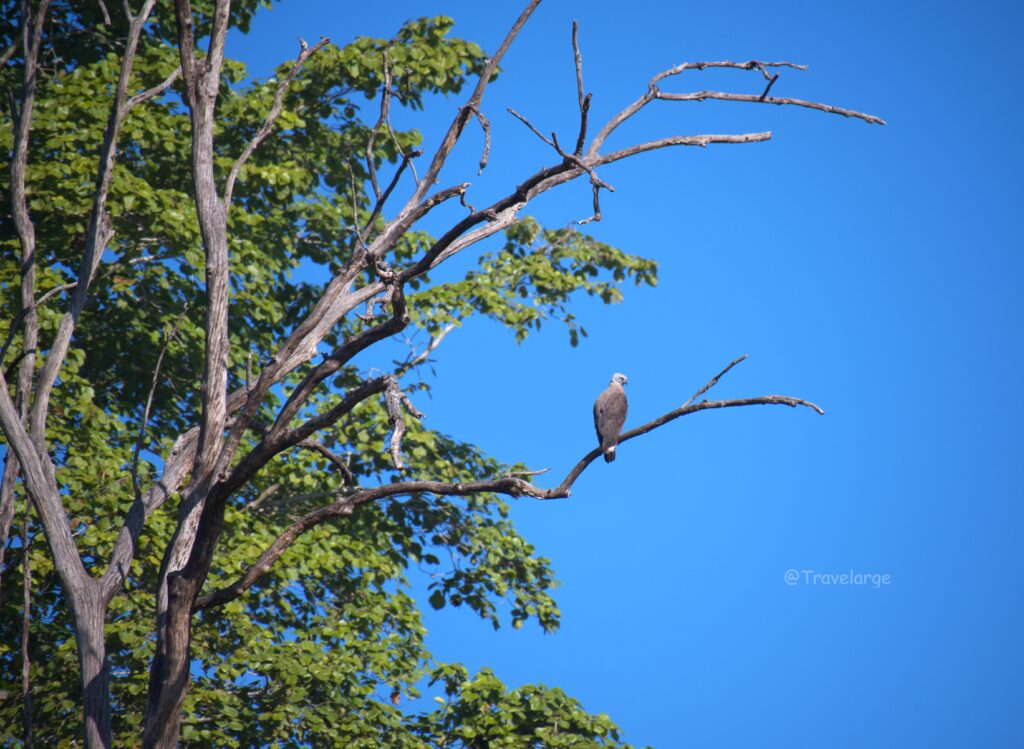
The regal Crested Serpent Eagle perched high on a dead branch.
The distinct Golden Oriole and the Racket-tailed Drongo with its unique tail feathers.
The Malabar Pied Hornbill and the constant “tonk-tonk” sound of the Coppersmith Barbet.
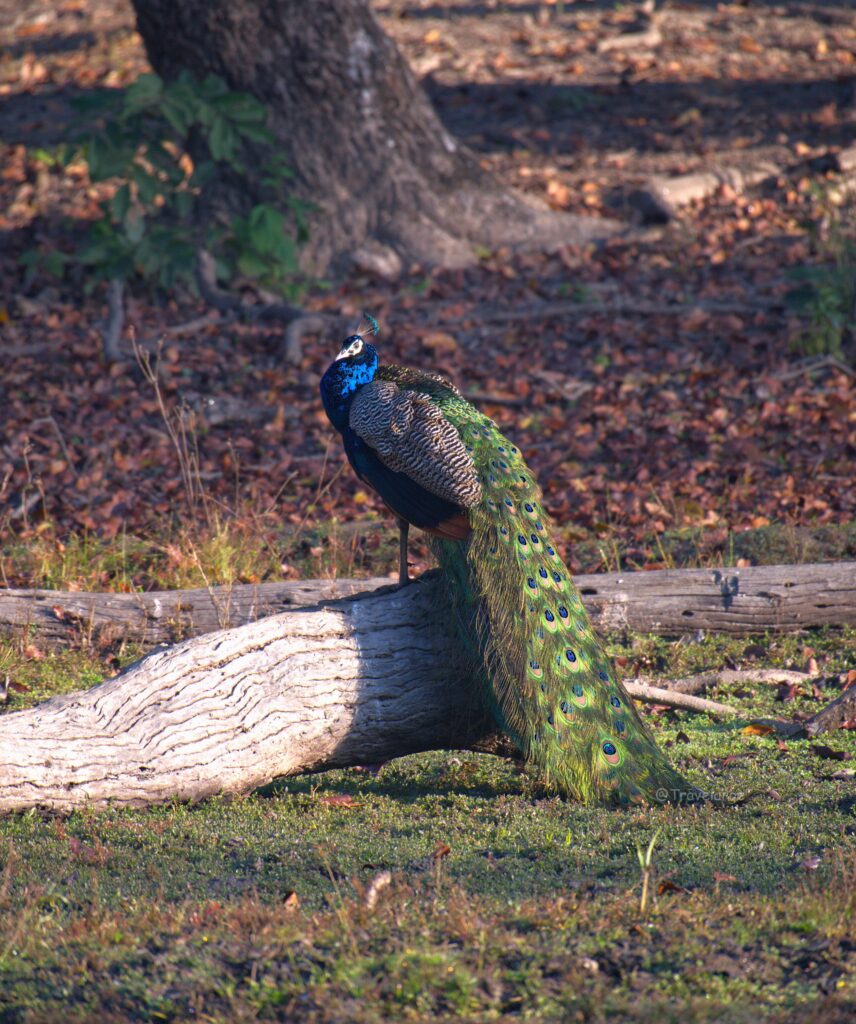
The national bird.
The Crested Serpent Eagle
A Lesson in Patience
For our daughter, this was the ultimate lesson in nature. She learned that the jungle doesn’t give up its secrets easily; you have to earn the sighting with patience and quiet observation. The joy on her face when we finally spotted a predator after following the “clues” was the highlight of our entire Kanha tiger safari experience.
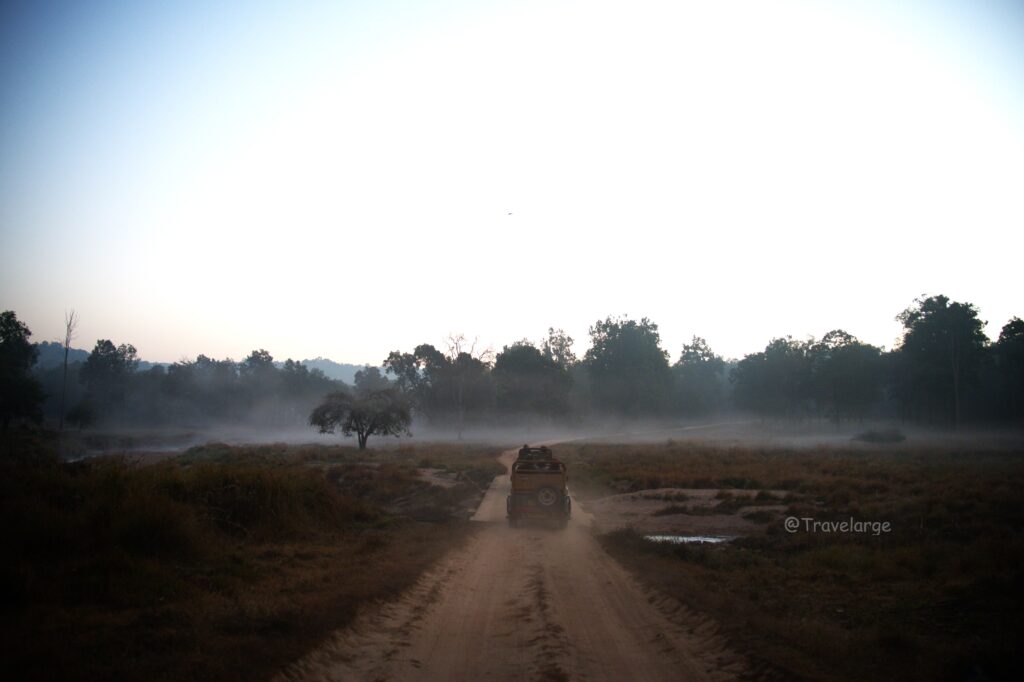
The last light of the day.
Coming Up Next…
Now that you’ve met the inhabitants, you’re probably wondering: How do I get there? And how do I snag those elusive safari permits? In the final part of this series, I’ll share the Essential Planning Guide to help you book your own Kanha adventure.